Analog picture by Chiara Pavolucci taken from Manicula’s archive.
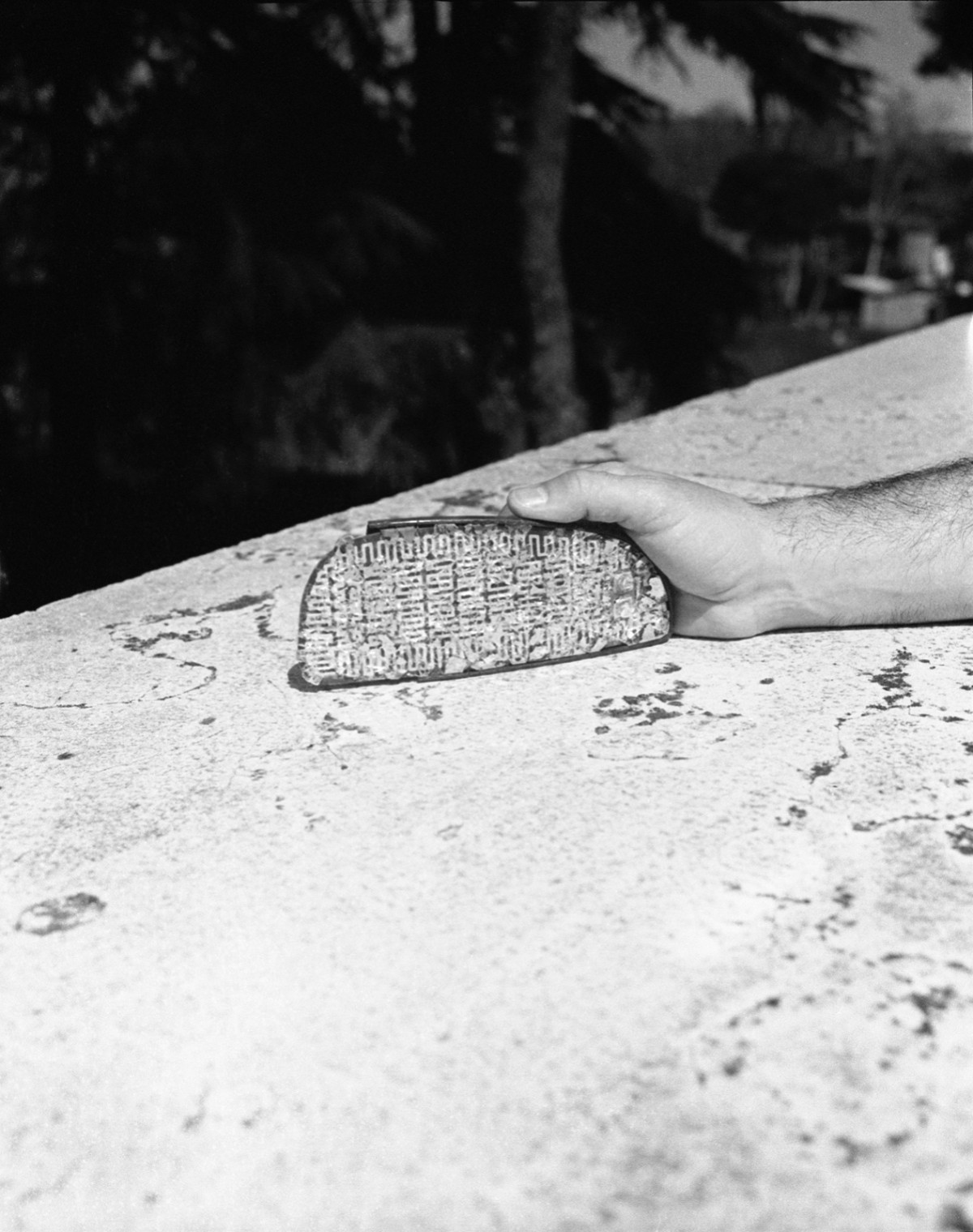
Analog picture by Chiara Pavolucci taken from Manicula’s archive.
Un oggetto di scena si pone tra performer e pubblico come una solidificazione di significati eventuali, come trappola per l’attenzione, come materiale agito; la sua presenza modifica il senso del corpo performativo che, nell’incontro-scontro-convivenza con l’oggetto, restituisce allo sguardo movimenti che possono essere pesanti e duri, liberi e leggeri, cangianti, organici e inanimati, singoli, moltiplicati, distrutti e ricostruiti ancora e ancora, sino a diventare coreografia, drammaturgia. Molto spesso però, l’alto grado di usufrutto estetico degli oggetti, porta a un trascuramento evidente, a una ridotta dignità data alla vitalità vibrante di questi corpi materiali: il loro suono. Cosa sappiamo di questa rudimentale coscienza acustica di cui i materiali sono intrisi e che si manifesta brevemente nel contatto, nell’impatto, in una carezza o in un colpo percussivo? Come possiamo estendere le implicazioni e le potenzialità di questi accadimenti -che si collocano tra udito e tatto/prensilità- per favorire un diverso approccio al sound design per la scena? Come imparare ad ascoltare attraverso gli oggetti, lasciando che il lavoro performativo emerga da essi?
La struttura base del seminario prevede 1 colloquio online e 1 incontro intensivo. In base alle esigenze è possibile prevedere un percorso più lungo.
→ 𝕕𝕠𝕧𝕖: a Cesena.
→ 𝕢𝕦𝕒𝕟𝕕𝕠: l’open call è sempre aperta, si decide assieme la data in base ai rispettivi impegni.
→ 𝕔𝕠𝕤𝕥𝕠: da concordare in base al progetto.
→ 𝕔𝕠𝕞𝕖: scrivere una email con oggetto
[indicare nomi, bio e breve motivazione]
→ 𝕟𝕠𝕥𝕒: Il seminario si rivolge a singoli, piccoli gruppi di performer e a chiunque sia interessato alle dinamiche di produzione sonora per la scena. Data l’ampia portata concettuale del seminario e la sua versatilità pratica, è comunque aperto a: scenografi, artigiani, danzatori, attori, musicisti, costumisti, teorici, pedagoghi, architetti, scultori e artisti visivi.
Michela Depetris, Claudia Catarzi
write@enricomalatesta.com
Enrico Malatesta is an artist active in experimental fields situated between music, performance, and sound-territory invastigations. His practice explores the relationship between sound, space, and body; the vitality of materials and the morphology of surfaces; with particular attention to modes of listening and an ecological approach to percussive acts. He presents his work in Italy, Europe, Canada, USA, Brazil, Mexico, Russia, Japan, and South Korea, participating in important contemporary music and performing arts festivals including: Blank Forms in New York, Gulbenkian Foundation in Lisbon, Bourse de Commerce in Paris, Biennale di Venezia in Venice, Onassis Stegi in Athens, New Munch Museet in Oslo, Pirelli HangarBicocca in Milan, and MAM-Rio in Rio de Janeiro. Also active as a teacher/mentor, he has collaborated for years with institutions such as IUAV – University of Venice, ISIA Pescara, the Fine Arts Academies of Bologna and Urbino, IAAD – Bologna, Fabrica, the Faculty of Architecture of Cesena, and Triennale Milano. Enrico Malatesta is nominated as Shape+ Artist 2025, winner of the Italian Council 2025 award, and “Una Boccata d’Arte” selected artist 2026.


NEXT:

•
•
•


Nicola Ratti, Alessandra Novaga, Enrico Malatesta
Alessandra Novaga: electric guitar
Enrico Malatesta: percussions
link

idiofoni a raschiamento
Nuova Superficie is an electro-acoustic sound project by Giovanni Lami and Enrico Malatesta is based upon horizontal actions in progress, that slowly change and melt over the course of the performance. Sound originates from several speakers and – in general – from different diffusion points, amplified or not, analog or acoustic, in a non-referential movement. The one and only need is to produce a simple sound-mass, seemingly static but unceasingly evolving through the labour of the musicians. They use their own instruments (as form and gesture) mainly on the surface, moving objects and working upon the skin of an amplified snare or directly in contact with the tape of the reel-to-reel recorder, trying to activate what is already present there but quiescent.
The aim is to realize a complex sound-space where each listening-experience can be free to evolve and wander and get lost. The sound is made from several diffusion points and is defined by sounds on the cusp of a dense texture, really homogeneous yet rich in detail and micro-perturbations. This non-stop negotiation between details on the horizon and the horizon itself, this lack of balance, and the interaction with the space hosting the performance is the base of this project, that could be considered as something in between electroacoustic music and site-specific action.